
The Emoji Over Your Baby's Face Isn't Working Anymore
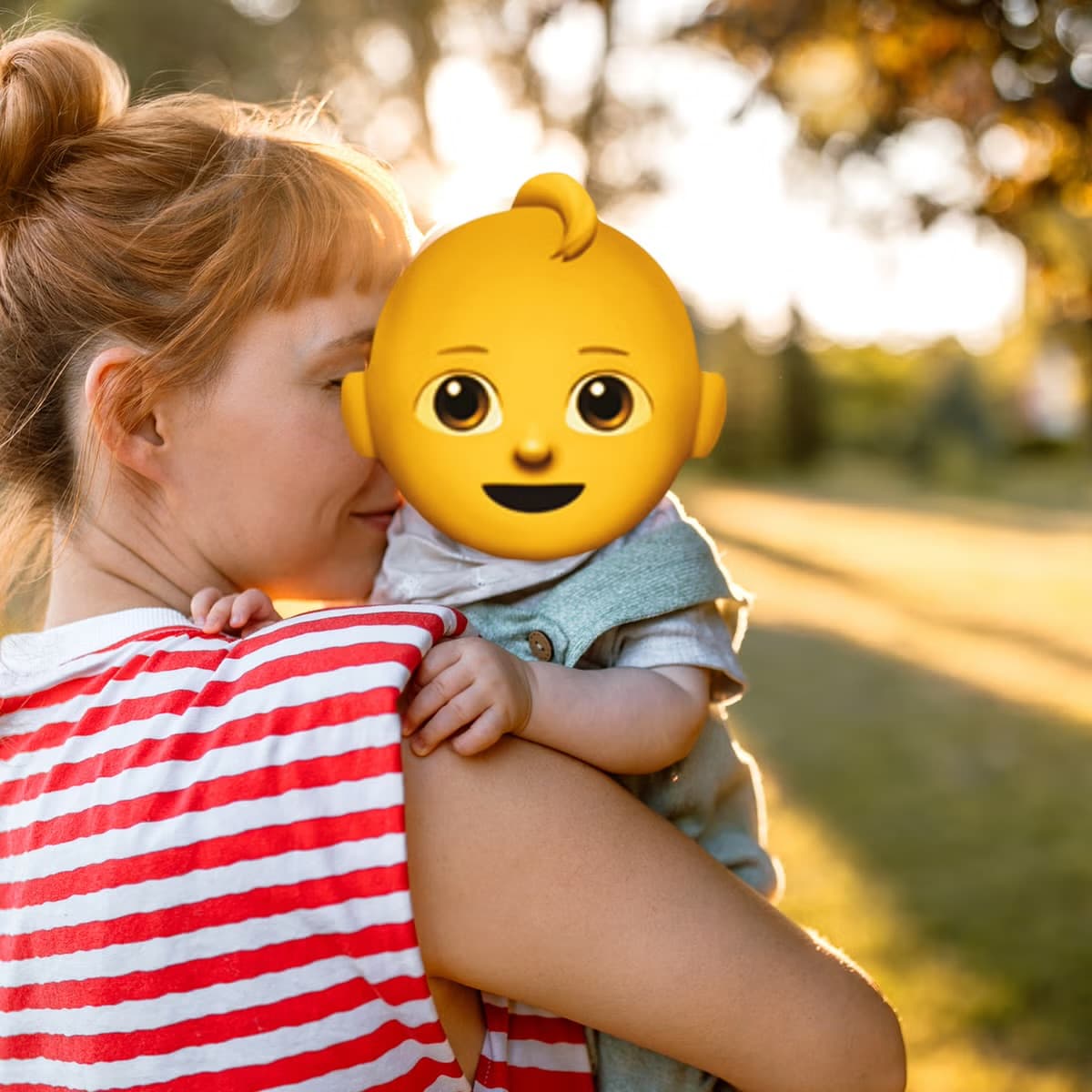
You cover your baby's face with a heart emoji on Instagram Stories and post the rest of the photo clear. It's the move almost every parent makes without thinking twice — quick, easy, and it feels like enough.
It isn't anymore. Family photographer Melanie Foster has used exactly this trick on her own kids' photos — and she's the one warning against relying on it: "there are newer AI features and technologies that enable people to remove stickers, so this may not be a long-term solution." AI inpainting tools can generate a plausible face underneath a sticker or emoji, and the original, uncovered photo you thought you covered up often still exists somewhere anyway — a camera roll backup, a shared drive, a tagged post you forgot about.
I've had this exact conversation with several clients recently. The other old tricks — blurring, cropping, "my account is private" — are failing the same way, for the same reason: they were built for a world where altering a photo took a human with real editing skill. That world is gone.
If an emoji is the only thing standing between a stranger and your baby's face, assume it isn't.
It's not just the emoji
- Blurring — deblurring and upscaling tools can sharpen a blurred region well enough to be usable. Blur was designed to survive a human squinting at it, not an algorithm built to reverse it.
- Cropping the face out — cropping doesn't strip the file's metadata. The exact time and GPS location a photo was taken can still tie your child to a real address and a real routine, even with no face in frame.
- "My account is private" — private only shrinks the circle that can see it directly. It doesn't stop a follower from screenshotting or re-sharing it, and follower lists creep over time as requests get accepted from people you don't really know anymore.
What actually helps
- Rethink the shot, not just the caption — silhouettes, faces turned away, creative angles: a child running through a field at golden hour, close-ups of tiny hands or feet, the back of a head mid-play. Melanie Foster shoots this way for families who want to keep sharing without showing an identifiable face — her favorite move is documenting the interaction itself (a hand-hold through a field, a piggyback ride, a sibling snuggle) instead of the individual child. For a milestone photo you do want to show clearly, cropping in-camera or in editing to leave out the eyes works well too.
- Keep clear face photos off public platforms entirely — save those for private channels: a direct message thread, a shared album with family-only access, an encrypted family-photo app, not a public feed, even a "private" one.
- Strip the metadata before you share anything — most phones embed the exact time and GPS location a photo was taken. Turn location tagging off in your camera settings, or check whether your messaging app already strips it before sending.
- Turn off AI training and face grouping — Google Photos and Apple Photos both group faces automatically by default, so check their settings to limit that. Look for an "allow AI training on your content" toggle in every app you use, and turn it off everywhere you find it.
- Talk to the people you share with — this is the step most families skip. A private circle only stays private if everyone in it treats it that way. Ask grandparents and family not to repost, screenshot, or share your child's photos onto their own public accounts, even with the best intentions.
Silhouette, golden hour
Backlit and turned away — you get the movement and the light, not an identifiable face.
Hands and feet, close up
A tiny hand wrapped around a finger, or bare feet on a blanket — personal, without a usable face.
The interaction, not the individual
A hand-hold, a piggyback ride — the story is the relationship, and neither face needs to show.
Illustrated examples, not real client photos — fitting, given the subject.
The step that actually gets skipped
That last one is usually the real leak. You can lock your own account down perfectly and still lose control the moment a proud grandparent posts the same photo publicly.
This isn't about hiding your kid
None of this means disappearing from social media or never sharing a milestone again. It means being deliberate about which photos are public and which stay in a smaller circle — the same instinct most parents already have about their kid's full name, school, or daily schedule, just extended to cover their face too. Small changes in habit now are a lot easier than trying to undo what's already public later.
The families who do this well aren't losing anything. They're just aiming the camera at the relationship instead of the face — the hand being held, the piggyback ride, the sibling snuggle — and that's often the more beautiful photo anyway.
If you want help locking down your own accounts — or your business's — happy to walk through it with you. Just ask.
Further reading
Melanie Foster Photography's "Keeping Babies Off Social Media" goes deeper on these photo techniques, straight from a working family photographer's own experience.